
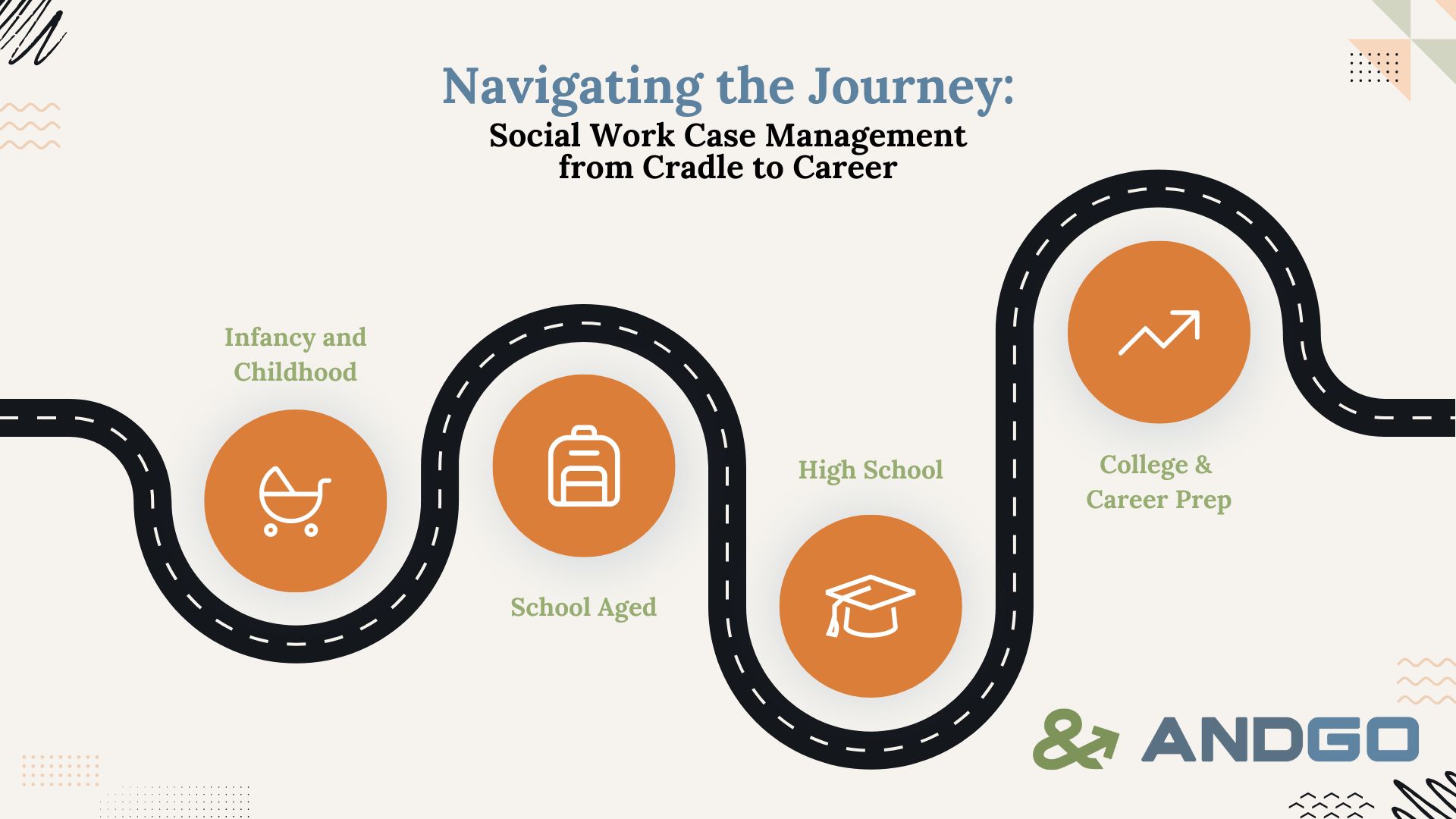
Social work case management is a consistent source of support for life’s transitions and challenges. Whether individuals face health crises, financial hardship, or family issues, social workers provide counseling, advocacy, and connections to community resources. They empower individuals to overcome obstacles, strengthen their support networks, and achieve their goals for themselves and their families. Case management is key to the success of this process.
Case management processes provide the necessary foundation for arranging and coordinating care that best meets the needs of individual persons or family units. This coordination of care can include not only assessment, but also the arrangement and management of services, monitoring and evaluation, and advocacy for the client. Documentation and caseload administration, along with accurate record-keeping, are critical to providing effective support.
Let’s examine how social work case management serves individuals from the cradle all the way to adulthood.
Providing Prenatal Support
Social workers provide support to families by ensuring expectant mothers receive proper prenatal care and parenting education. They also connect families with community resources, including SNAP benefits, medical assistance, and basic needs such as housing, clothing, diapers, and WIC benefits. At this stage, social work case management helps to address potential risks, laying a solid foundation for a child’s development.
Infancy and Childhood Support
The arrival of a new baby is looked upon as a cause for celebration. However, for some families, a new baby presents challenges. Social workers provide support for new parents by helping them build upon their strengths and grow their parenting skills. Additionally, social workers work within the community to connect families with services as needs arise. Early intervention and developmental screenings, facilitated by the social worker, provide very young children with critical skill development in their formative years.
Support for School-Aged Children
Students often encounter additional challenges in the school environment. Social workers in schools help students navigate issues such as learning disabilities, bullying, family crises, behavioral issues, and more. Within the school setting, social workers work with both families and school staff to help students develop and thrive. This can include assisting in the development of Individualized Education Plans (IEPs), connecting students with counseling, and identifying school and community programs to help students grow and thrive.
Helping Teens Navigate Adolescence
Adolescence is a time of profound change and during this period, many individuals need additional support. Social workers who work with teens often help individuals navigate issues such as relationships, social and academic challenges, family problems, mental health issues, and more. In fact, adolescence is a period in which many teens experience a major depressive episode for the first time. Social workers can help provide support, both through counseling and by connecting individuals with more intensive supports.
Launching Young Adults
As young adults embark on their career journeys, social work case management continues to play a vital role. Social workers may assist with college admissions, financial aid applications, and career planning, ensuring that young adults have the necessary resources to pursue their educational and vocational aspirations. For those entering the workforce directly, social workers may assist with employment counseling, skills training, and support services to promote long-term economic stability.
The Role of Social Work Case Management
Social work case management is indispensable in navigating the journey from cradle to career. By providing holistic support tailored to individual and family needs, social workers empower individuals to overcome challenges, capitalize on opportunities, and achieve their full potential. Through their dedication and expertise, social workers not only transform individual lives but also contribute to building resilient communities where everyone has the opportunity to thrive.